How Often Should a Pool Pump Be Replaced: Expert Guidance on Lifespan and Maintenance
.png)
The pool pump circulates water and keeps your pool clean. Knowing when to replace it protects performance and efficiency. This guide summarizes typical lifespans, the main factors that shorten or extend service life, clear replacement signs, and maintenance steps that prolong pump life.
What Is the Average Lifespan of a Pool Pump?
Most pool pumps last around 8–15 years. How long yours lasts depends on use, maintenance, and conditions. Regular servicing and prompt repairs push a pump toward the upper end of that range; neglect shortens it.
Factors Influencing Pool Pump Lifespan in Long Island Climate
Local climate matters. Long Island's freezing winters risk freeze damage, and humid summers raise corrosion and wear. Seasonal swings increase strain, so winterising and scheduled inspections are important for durability.
Comparing Single Speed and Variable Speed Pump Durability
Single-speed pumps run at full power and generally wear faster and cost more to run. Variable-speed pumps operate at lower speeds when full output isn't needed, reducing motor stress and improving energy performance and longevity.
What Are the Key Signs Your Pool Pump Needs Replacement?
Spotting replacement indicators early helps avoid failures. Watch for these common warning signs:
- Unusual Noises : Grinding, rattling or screeching often means internal wear or loose components.
- Inconsistent Water Flow : Reduced or fluctuating flow suggests a failing pump, impeller issues, or blockages.
- Increased Energy Bills : Rising electricity use can indicate a less efficient or failing motor.
Common Symptoms of Pool Pump Motor Failure
Early detection prevents full breakdowns. Common motor symptoms are overheating, repeated breaker trips, and visible corrosion or damage.
- Overheating : Excess heat at the motor points to overload or internal faults.
- Frequent Tripping of Circuit Breakers : Repeated trips often signal electrical faults or a failing motor.
- Visible Wear and Tear : Corrosion, cracks, or leaks indicate declining condition and need for attention.
When to Repair Versus Replace Your Pool Pump
Consider age, repair cost, and expected remaining life. Compare repair bills to the cost of a new, more efficient pump and factor long-term energy savings.
- Cost Analysis : If repairs exceed roughly half the cost of a new pump, replacement often makes more sense.
- Lifespan Considerations : Nearing the expected lifespan favors replacement to avoid repeated repairs.
- Long-Term Efficiency Benefits : Newer pumps usually save energy and reduce operating costs over time.
How Does Replacing a Pool Pump Impact Energy Efficiency and Costs?
Modern, efficient pumps lower electricity use and operating costs while delivering equal or better circulation. Upgrading can reduce monthly bills and environmental impact.
Energy Savings from Upgrading to Variable Speed Pumps
Variable-speed units match output to need, saving energy during low-demand periods. Over time, lower bills can offset the initial purchase cost.
Research further underscores the energy savings and cost comparisons tied to upgrading from single-speed to variable-speed pool pumps.
Variable Speed Pool Pumps: Energy Savings & Replacement
ABSTRACT: This report evaluates potential energy savings when replacing traditional single-speed pool pumps with variable-speed units and provides a basic cost comparison between continued use of older pumps and purchasing new models. The report also outlines a simple, step-by-step process for inspecting the pool area and installing a new pump.
Measure guideline: replacing single-speed pool pumps with variable speed pumps for energy savings, 2012
Cost Analysis: Replacement Versus Repair Expenses
Typical ranges help planning. The table below compares common repair, replacement and annual maintenance expenses so you can weigh short-term and long-term costs.
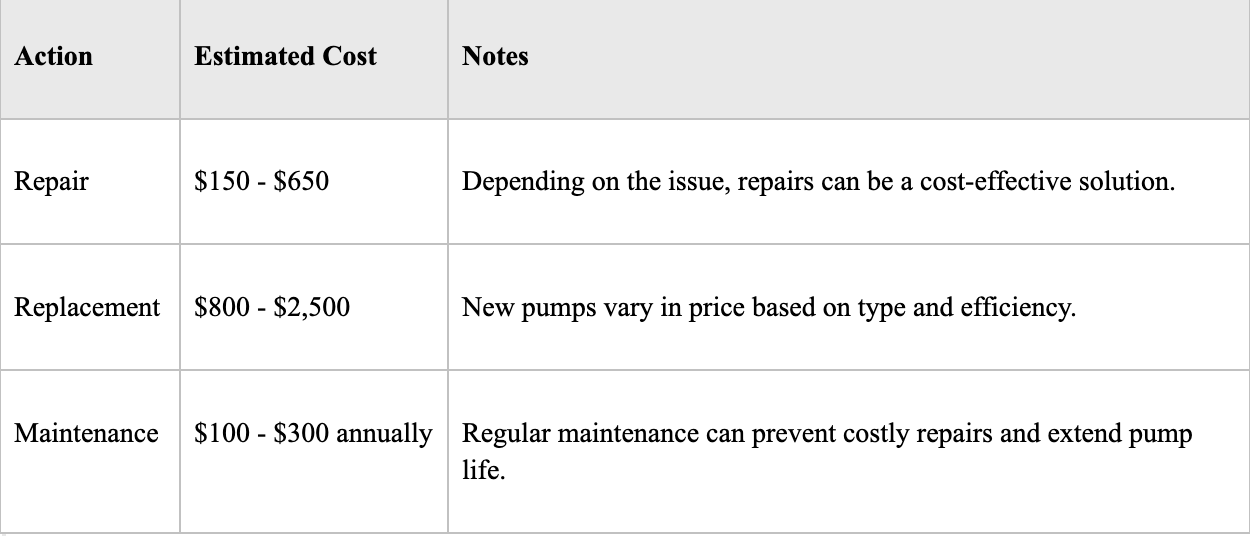
Balance immediate repair costs against expected operating savings when deciding whether to repair or replace.
What Maintenance Practices Extend Your Pool Pump’s Life?
Routine maintenance preserves performance and prevents premature failure. Focus on inspections, proper water chemistry, and keeping the pump and filter clean.
- Regular Inspections : Check seals, fittings and general operation on a schedule.
- Proper Chemical Balancing : Balanced water prevents corrosion and damage.
- Routine Cleaning : Keep the strainer and filter clear to avoid strain on the pump.
Routine Service Steps to Prevent Premature Pump Failure
Simple weekly checks and annual professional inspections catch small issues before they become major problems.
- Weekly Maintenance : Verify operation and clear the strainer basket.
- Monitor Water Levels : Keep levels adequate to prevent the pump running dry.
- Professional Maintenance : Annual service helps spot electrical or mechanical concerns.
Scheduling Professional Inspections and Repairs
Professional inspections identify issues homeowners may miss and provide durable repairs. Regular service reduces the risk of costly breakdowns and keeps the system efficient.
Frequently Asked Questions
1. How can I tell if my pool pump is energy efficient?
Look for an energy rating or variable-speed capability and compare energy bills before and after upgrades. Regular maintenance also helps sustain rated efficiency.
2. What are the benefits of upgrading to a variable speed pool pump?
Variable-speed pumps use less energy, run quieter and reduce wear by operating at lower speeds when full power isn't needed.
3. How often should I perform maintenance on my pool pump?
Do basic checks weekly: run the pump, clean the strainer basket and confirm water level. Arrange a professional inspection at least annually.
4. What should I do if my pool pump is making strange noises?
Turn the pump off, check for loose parts or debris, and call a technician if the noise persists to avoid larger damage.
5. Can I repair my pool pump myself, or should I hire a professional?
Homeowners can handle minor tasks like cleaning the strainer. For electrical or motor work, hire a professional. If repair costs near half the price of a new pump, consider replacement.
6. What factors should I consider when choosing a new pool pump?
Match pump size to your pool, compare efficiency ratings, factor noise and warranty, and set a realistic budget. Seek professional advice for local conditions.
7. How does the climate affect the lifespan of my pool pump?
Freezing temperatures risk mechanical damage, while high humidity speeds corrosion. In extreme climates, winterising and frequent inspections help extend pump life.
Conclusion
Knowing your pump's expected lifespan and following a consistent maintenance plan keeps your pool operating efficiently. Recognise replacement signs early and weigh repair costs against long-term efficiency gains. Upgrading to energy-efficient models, such as variable-speed pumps, can improve performance and cut operating expenses.
.jpg)
.jpg)